
23 June 2026 · water hammer · check valves
Water hammer in irrigation networks: how to prevent it with check valves and rubber expansion joints
Every pump stop is a hammer blow on the pipeline. Which check valve stops the water column best, where the rubber expansion joint goes and which design mistakes we see most often in control heads.
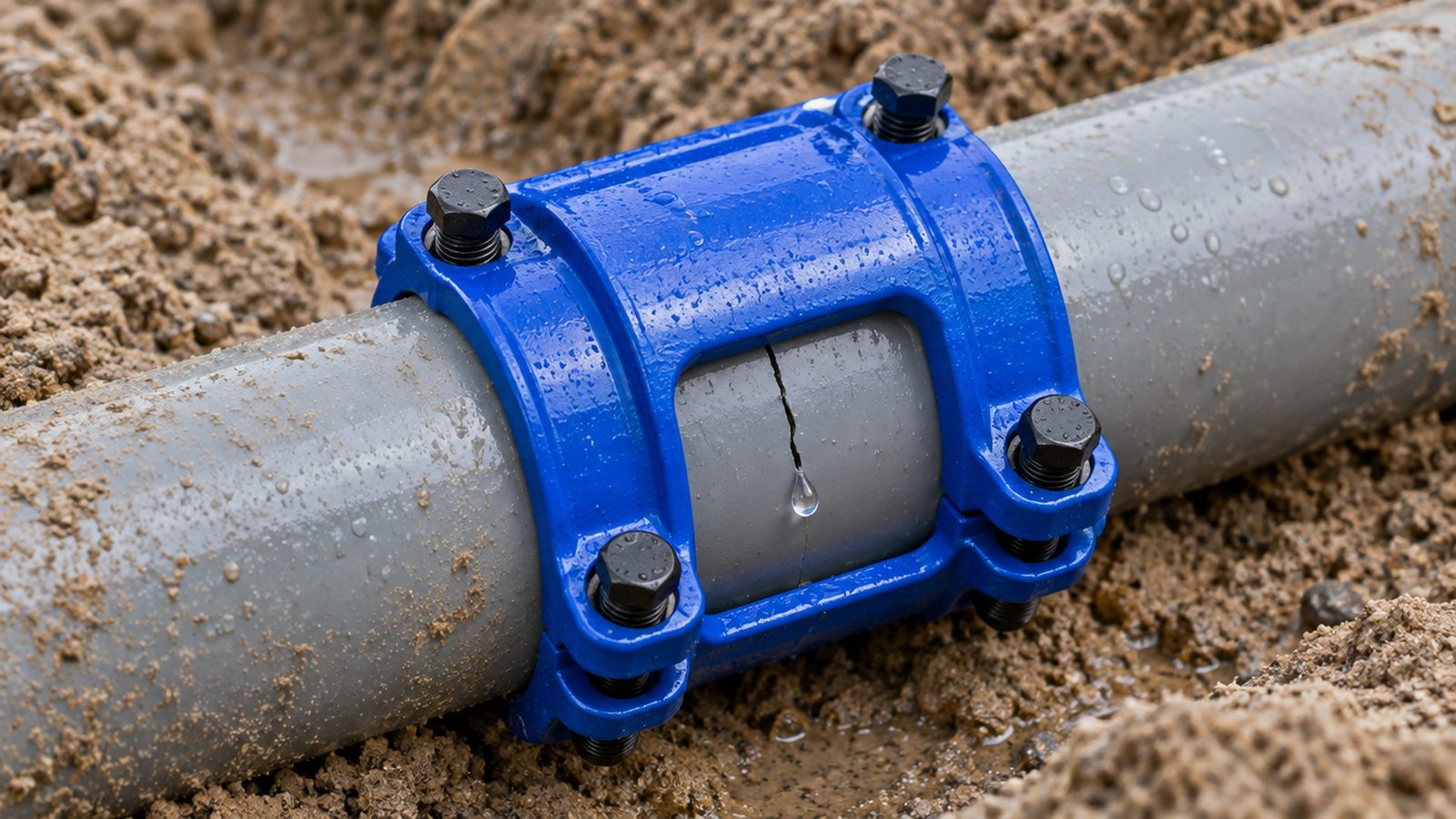
Water hammer gives no warning. The pump stops, the water column keeps moving under its own momentum, is brought to a sudden halt and comes back as a pressure wave that can reach several times the service pressure. In an irrigation network with kilometres of buried PVC, that hammer blow translates into joints pulling out, pipes bursting and valves cracking. The good news is that it can almost always be prevented with two well-chosen parts.
The check valve: stopping the column in time
The job of the check valve is to stop the water flowing back towards the pump. But not all of them close at the same speed, and that speed is the key:
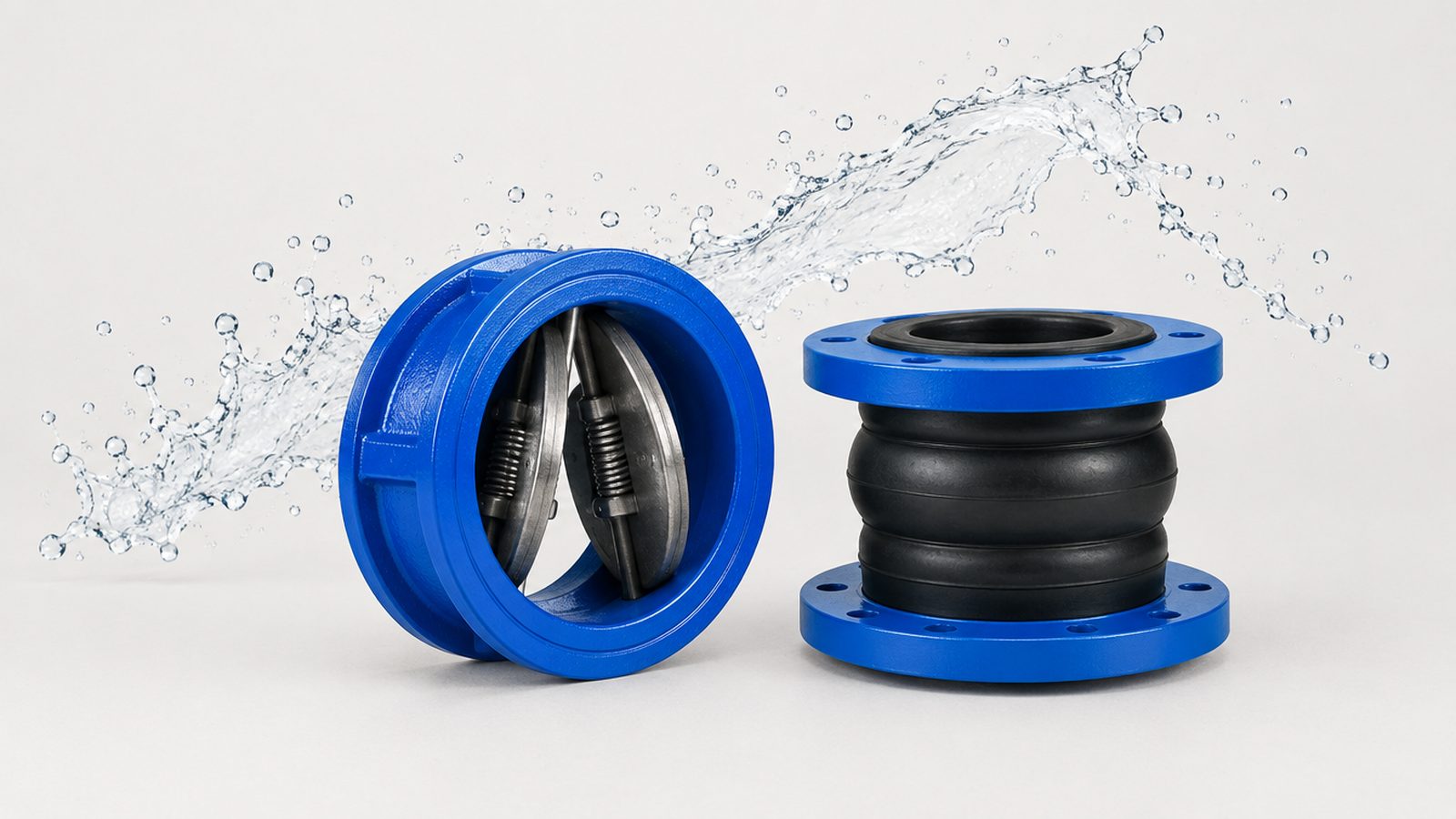
- Dual-plate wafer: two spring-loaded half-discs that close as soon as the flow drops, before the column reverses direction. It is the one that generates the least hammer and takes up the least space: it is mounted between two flanges. For demanding pumping mains we have the dual-plate PN 25 version.
- Swing check: a single hinged disc, with very little head loss. It closes later, so it is suitable for horizontal runs with steady flow.
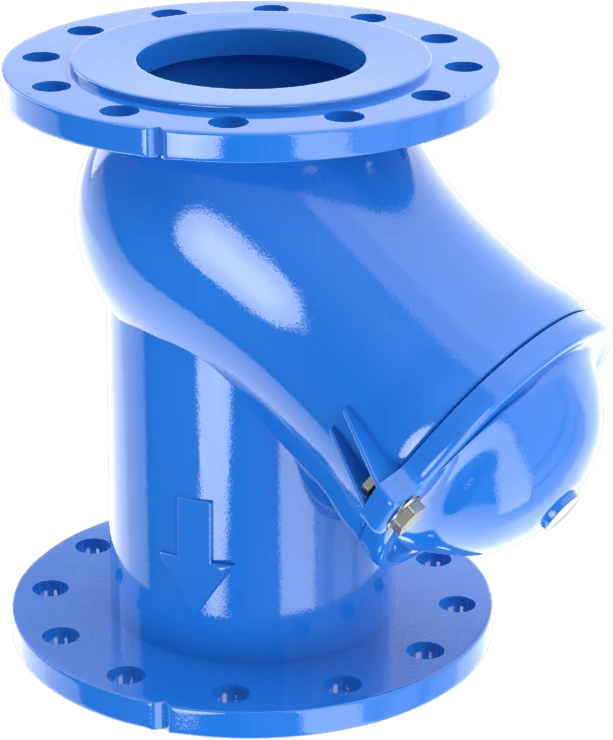
- Ball check: a rubber-coated ball that rolls onto its seat. Ideal for loaded water, wells and irrigation lifts carrying sand, because it does not jam.
The expansion joint: absorbing what gets through
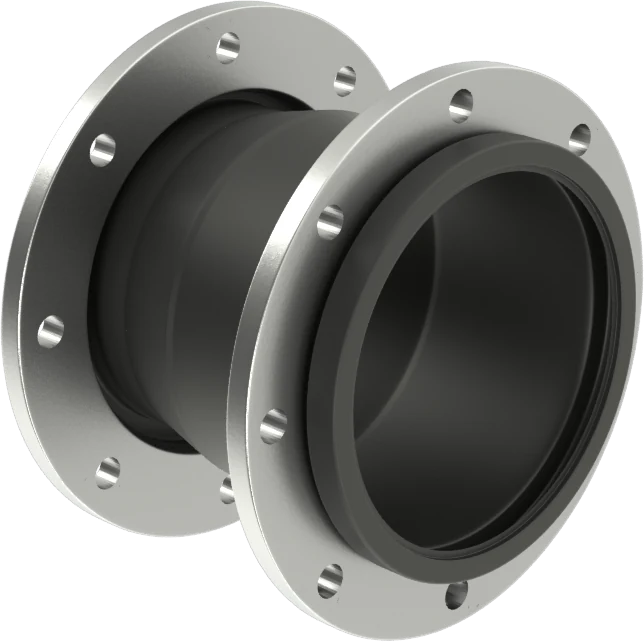
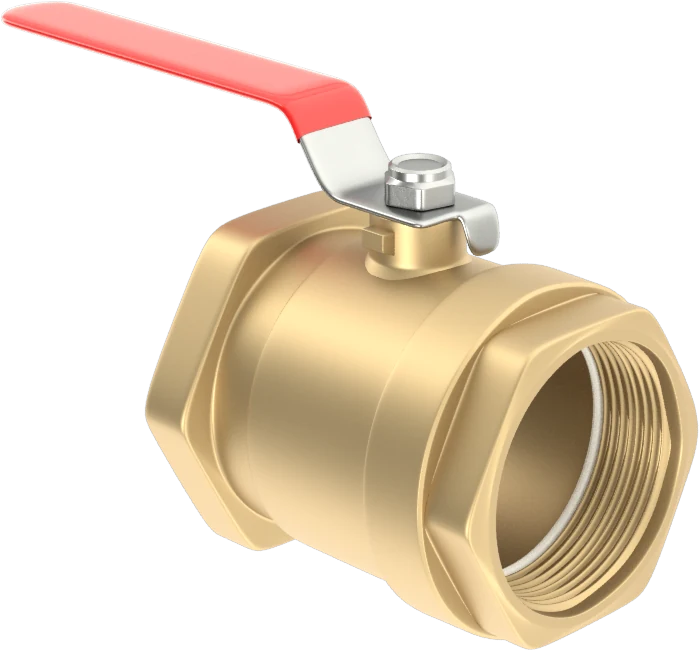
Even if the check valve closes well, pump vibration and the small residual surge travel along the pipeline. The EPDM rubber expansion joint, flanged or threaded, is mounted at the pump outlet and absorbs vibration, expansion and slight misalignment. A 1" threaded expansion joint on a small pump stops the threads of the entire control head from working loose over the months.
The mistakes we see most often
- Check valve far from the pump. The more pipe there is between the two, the more water column arrives to hit the disc.
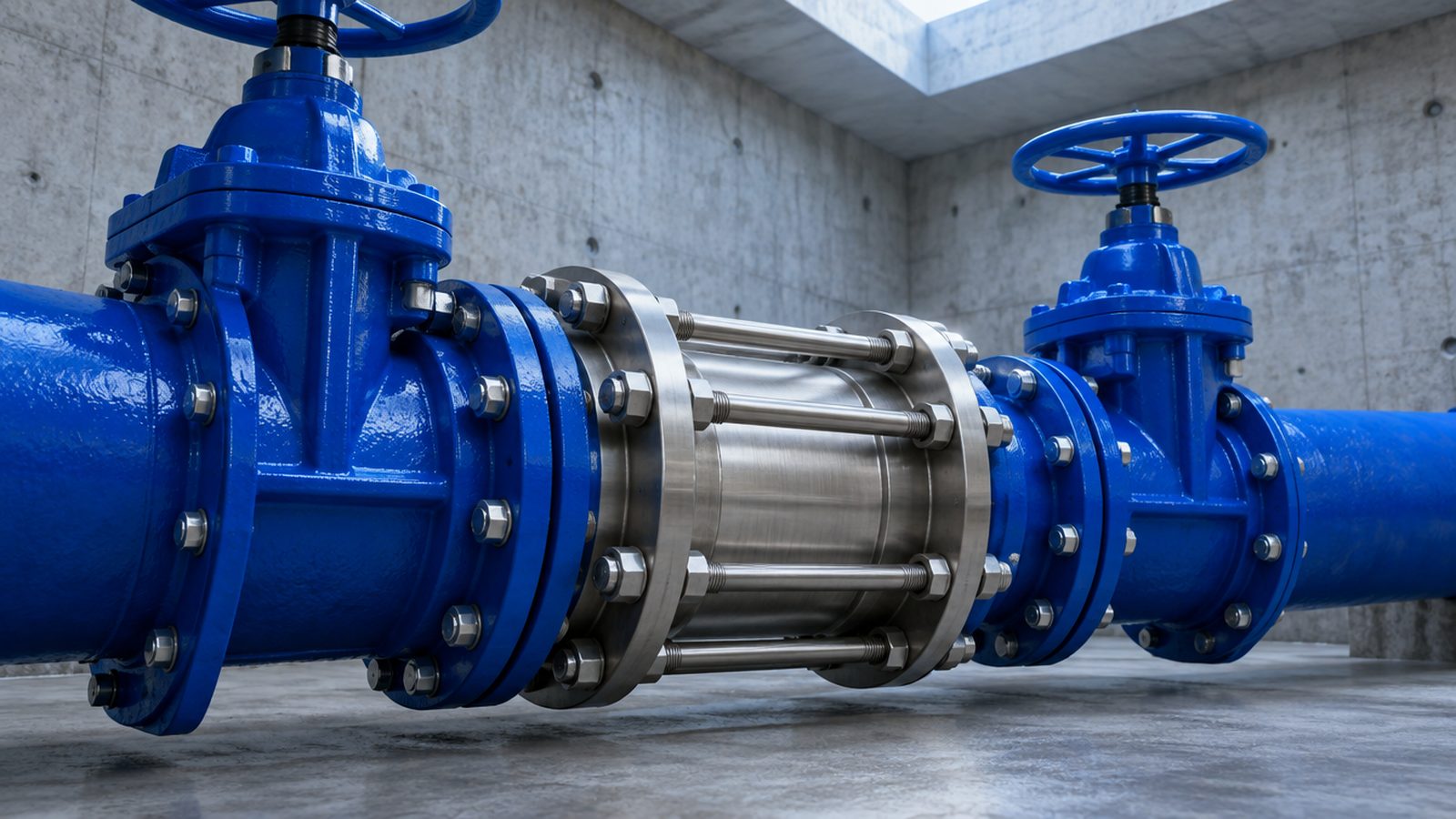
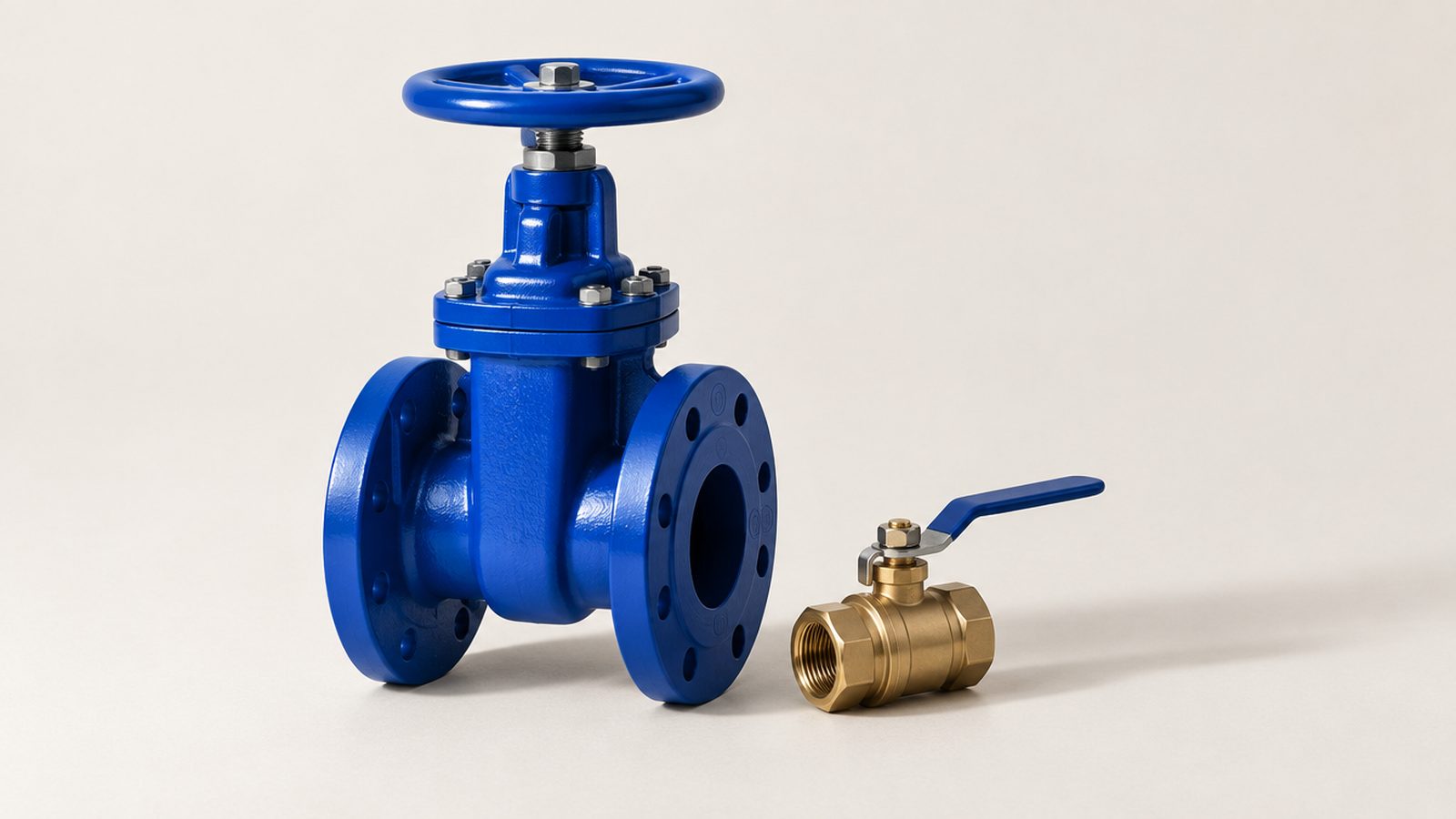
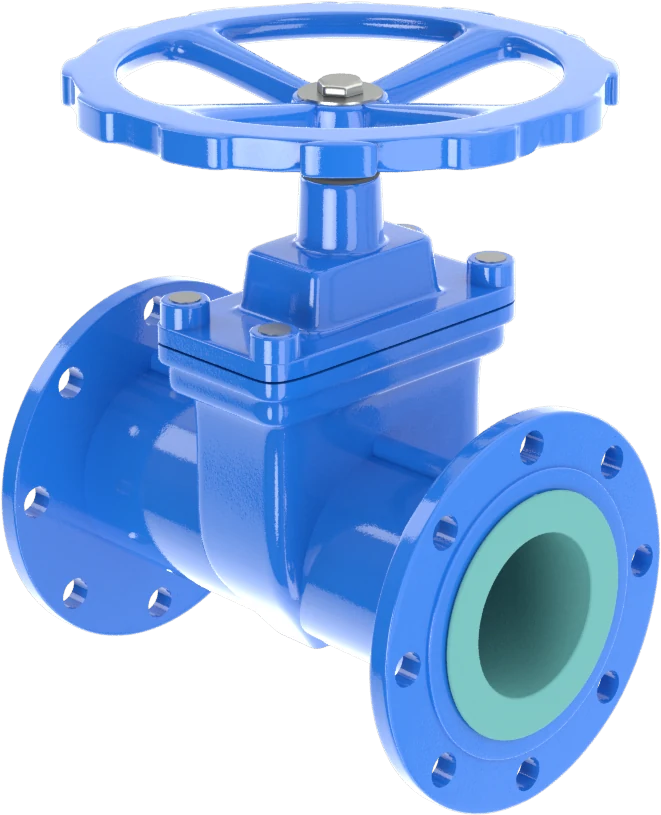
- No shut-off valve downstream. A resilient-seated gate valve after the check valve allows you to isolate and maintain without draining the network.
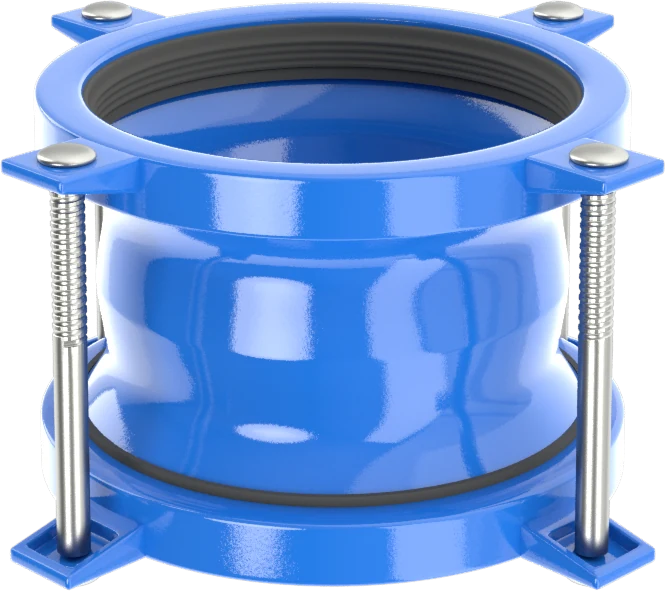
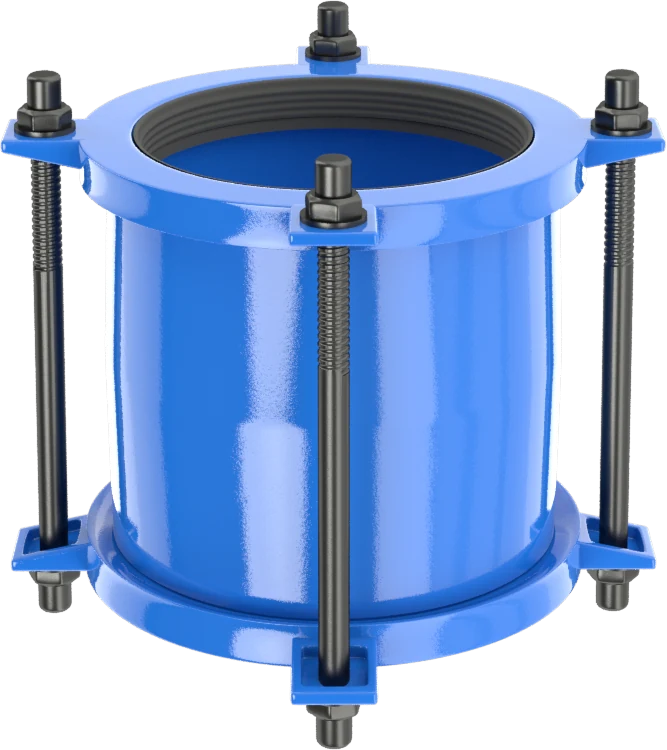
- No dismantling joint. When the check valve has to be replaced, there is no play and it ends up being hammered out. We explain this in Dismantling joints: what they are for.
- Ball check valve in a vertical downward line. The ball does not return to its seat. It goes horizontal or vertical upward.
And the design of the network
No valve is a substitute for a proper calculation: soft starts and stops with a variable-speed drive, air valves at high points and velocities below 1.5 m/s in PVC. With that and a fast-closing check valve, water hammer stops being a problem and becomes just another figure in the project report.
If you are designing a control head, send us the layout and we will tell you which check valve suits your pump and your diameter.