
19 August 2026 · repair · pvc
How to repair a leak in a buried PVC pipe without stopping irrigation
Anti-pull repair collar or stainless steel repair clamp: which to use depending on the type of break, how it is fitted in the trench and why the repair withstands the pressure of the irrigation season.
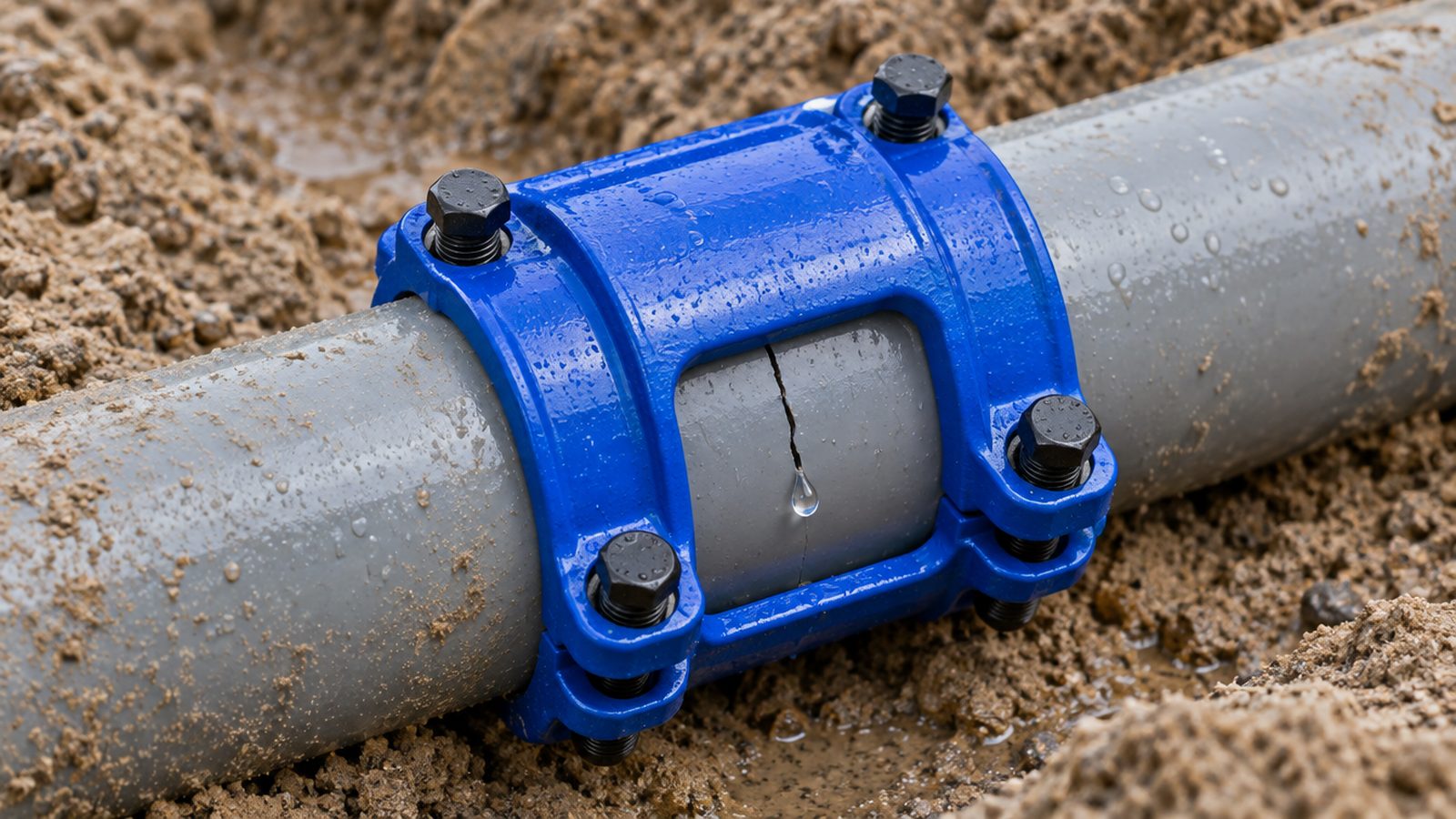
August is the month when we receive the most calls with the same sentence: "a pipe has burst and I can't stop the irrigation". A leak in the middle of the season cannot wait for a coupling to arrive, the pipe to be cut and the joint remade. That is what two families of parts leaving our foundry are designed for: repairing on the go, with the network under pressure and at the bottom of a trench.
First, identify the break
Not all leaks are the same, and the right part depends on the damage:
- Longitudinal crack or pinhole: the pipe is still in one piece and only one area needs sealing. This is the most common case in aged PVC.
- Circumferential break or split pipe: the two ends can separate when the pressure rises. Here the problem is not just watertightness, but axial movement.
- Weeping joint: the original joint has lost its rubber or the pipe has pulled out a few millimetres.
Stainless steel repair clamp
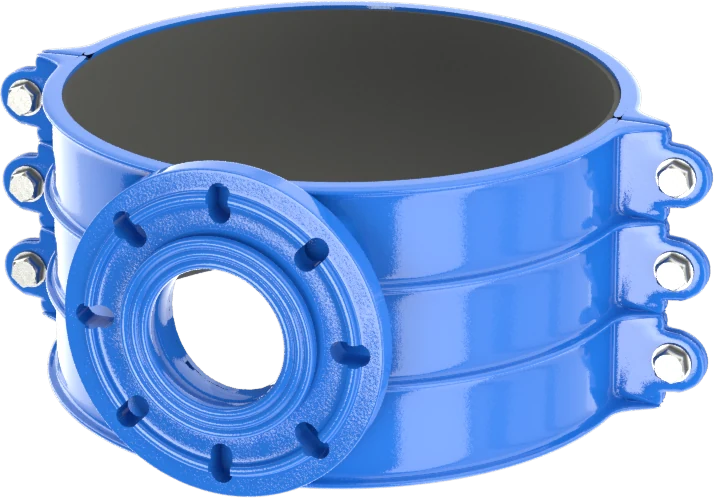
For cracks and pinholes, the stainless steel repair clamp is the fastest solution: it opens up, wraps around the pipe with the EPDM gasket against the leak, and the locks are tightened. With one, two or three locks depending on the diameter, and in lengths from 150 to 400 mm, it covers everything from Ø60 pipe to large mains. It does not require thorough cleaning of the pipe or waiting for it to dry.
Anti-pull repair collar
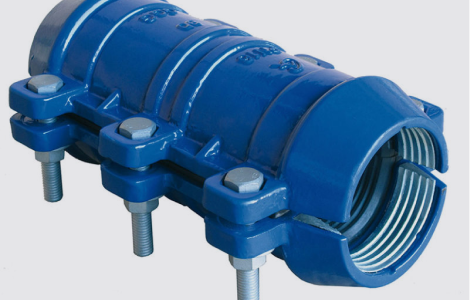
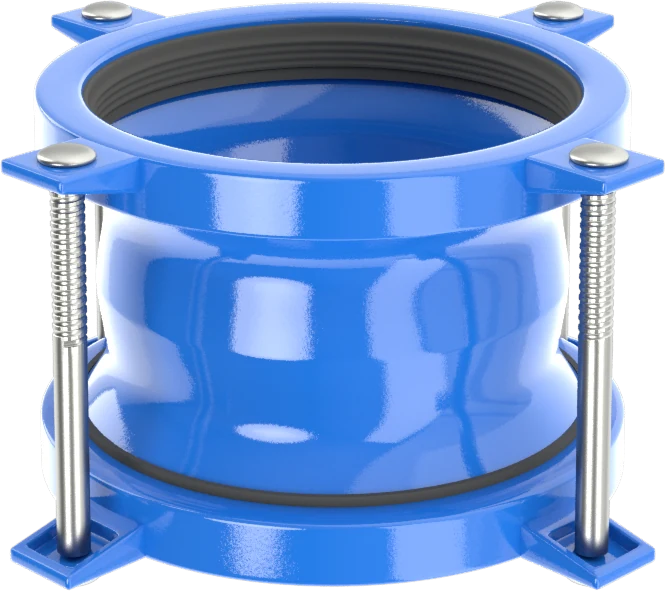
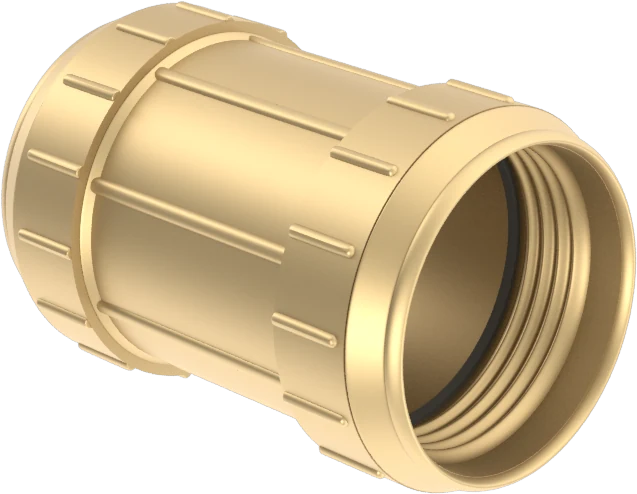
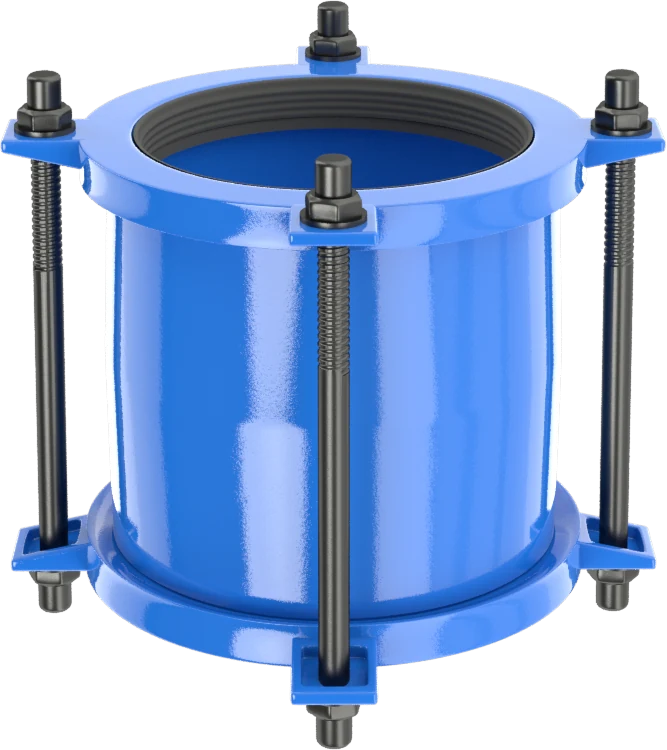
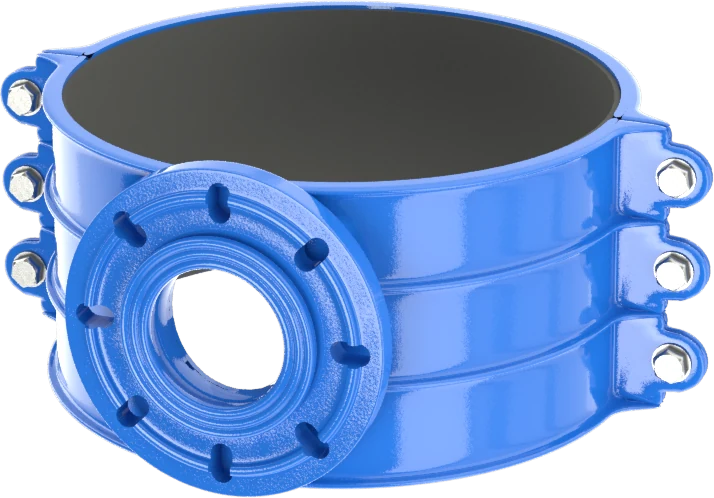
When the pipe is split, the clamp seals but does not restrain. That is where the anti-pull repair collar comes in: a two-piece ductile iron body with toothed brass rings at each end that bite into the PVC or PE and absorb the axial pull. It is fitted without moving the pipe, without a thrust block and without dismantling anything upstream. A DN 90 collar is installed in under ten minutes with an open-ended spanner.
How it is done in the trench
- Expose the pipe about 30 cm on either side of the break and clean the mud off the surface.
- Offer up the part with the leak centred; with the collar, check that the rings sit on sound pipe.
- Tighten the bolts crosswise and in stages, so that the gasket seats evenly.
- Bring the pressure up slowly before backfilling. If it does not drip in five minutes, it will not drip.
When it is better to cut
If the damaged section is longer than the part, the right thing to do is to cut and join with an anti-pull coupling for PVC/PE, which restrains both ends just like the collar. We explain how that system works in Anti-pull fittings: what they are and what they are for.
All of these references are in stock in Molina de Segura and ship the same day. If you have an emergency, request a quote stating the outside diameter of the pipe: it is the only piece of information we need.