
10 March 2026 · flanges · pvc
Universal, wide-range or anti-pull flange adaptor: which to choose to connect pipe to a valve
All three go from plain pipe to flange, but they solve different problems: diameter tolerance, transition between materials or axial restraint. A short guide so you do not order the wrong part.
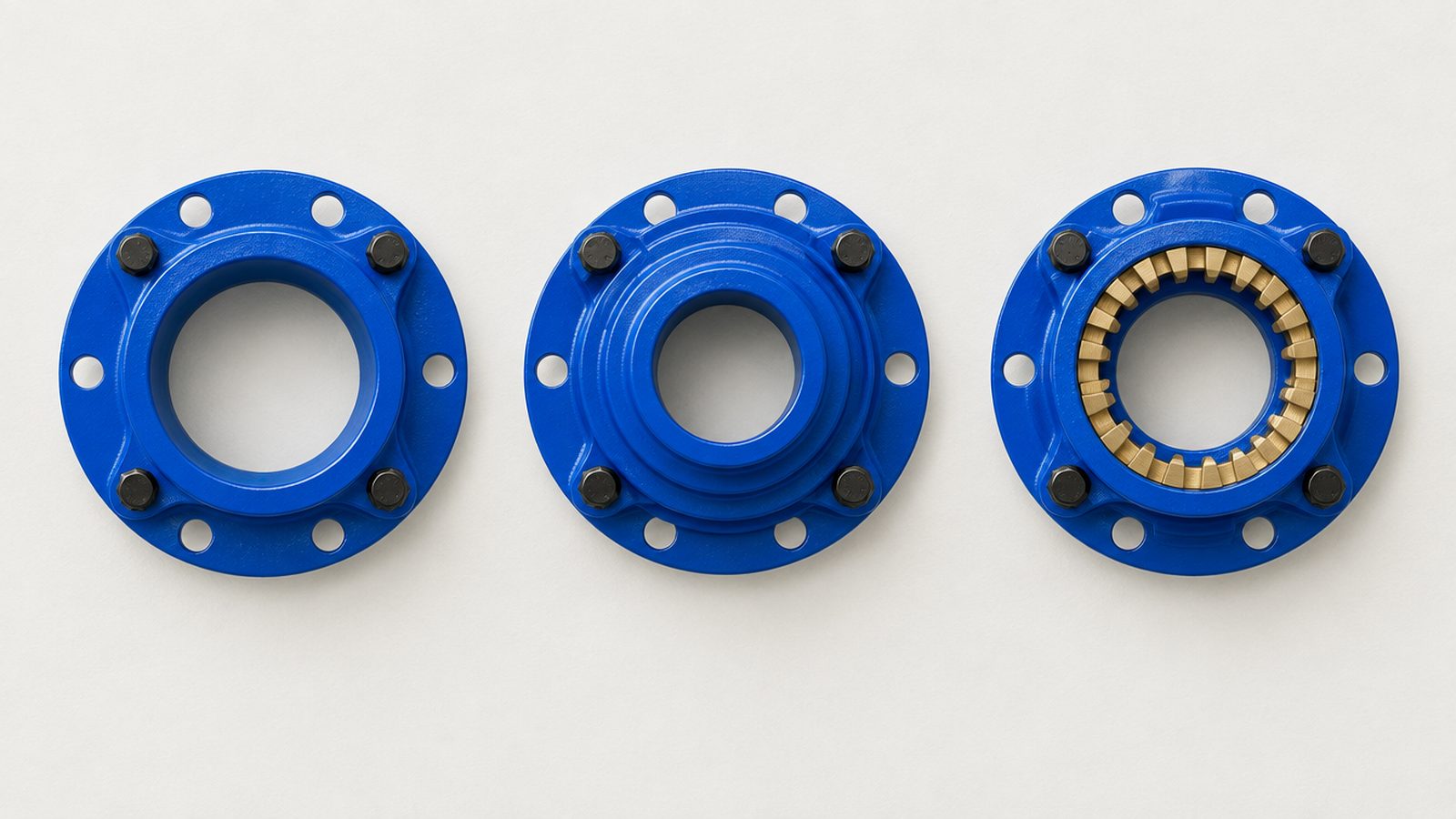
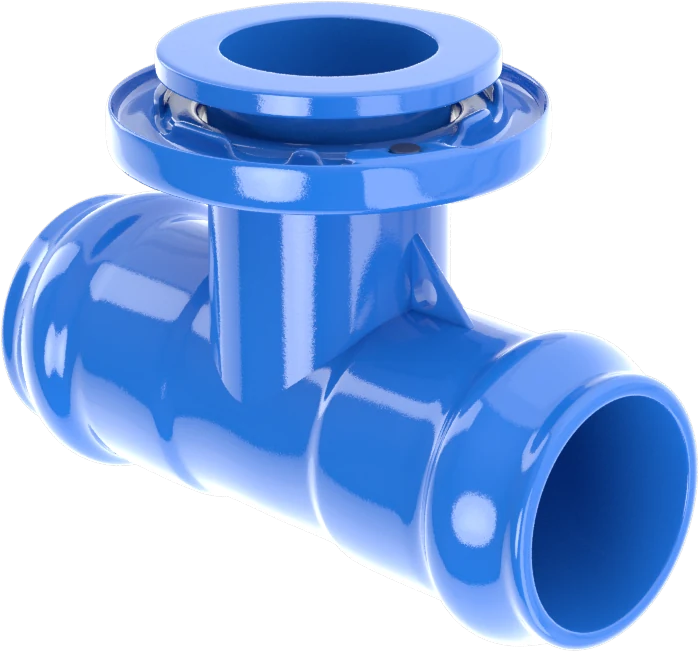
Almost every valve and fitting in a network has flanges, and almost all the pipe is plain-ended. The part that gets from one to the other looks like a detail, but it is where orders go wrong most often. We manufacture three types of flange adaptor for plain pipe, and this is the quickest way to know which one you need.
Universal flange adaptor: tolerance
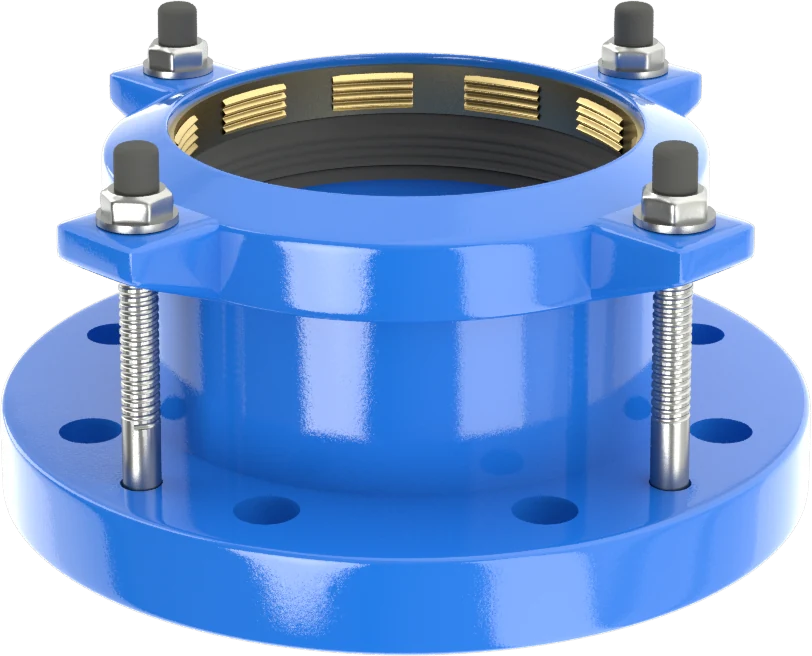
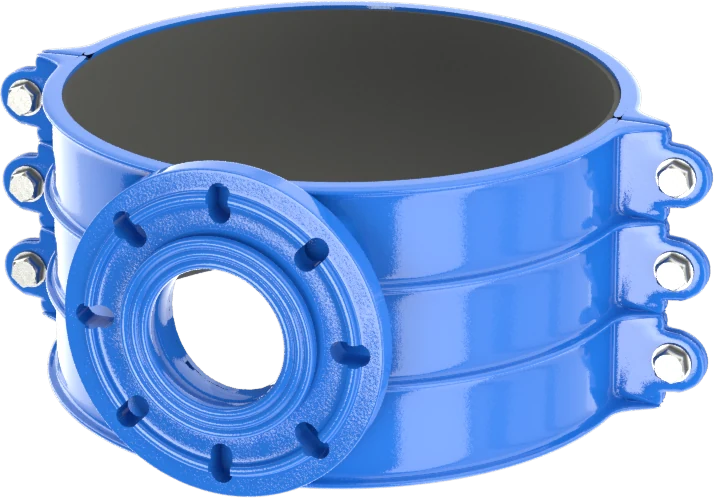
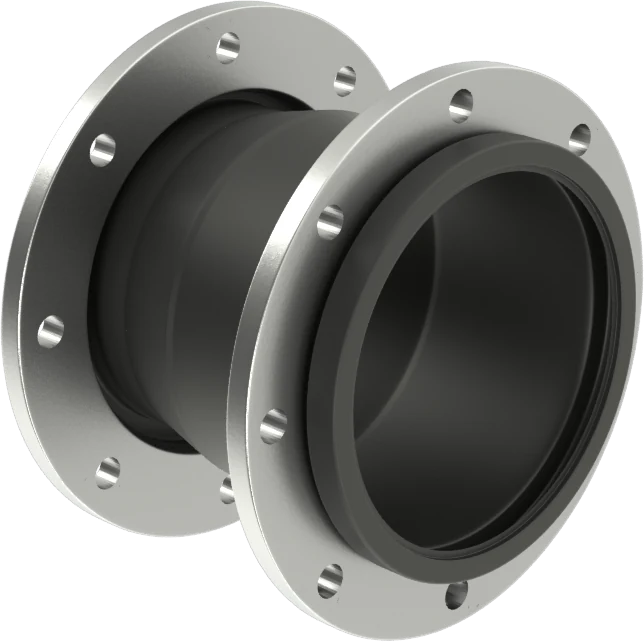
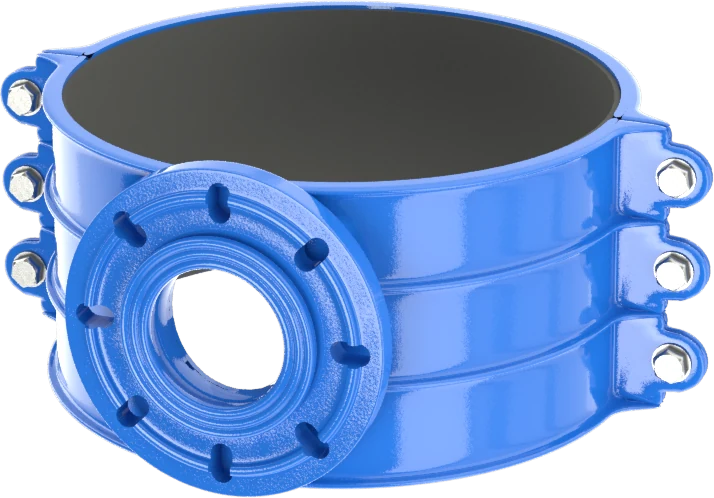
The universal flange adaptor has a wide-range gasket that adapts to several outside diameters. A DN 80 universal flange adaptor covers from Ø84 to Ø106, which means it works with 90 mm PVC, intermediate-class asbestos cement or old cast iron. It is the part for mixed networks and renewals, when you do not know for certain what you are going to find in the trench. It does not restrain the pipe: it needs anchorage.
Wide-range flange adaptor: transition
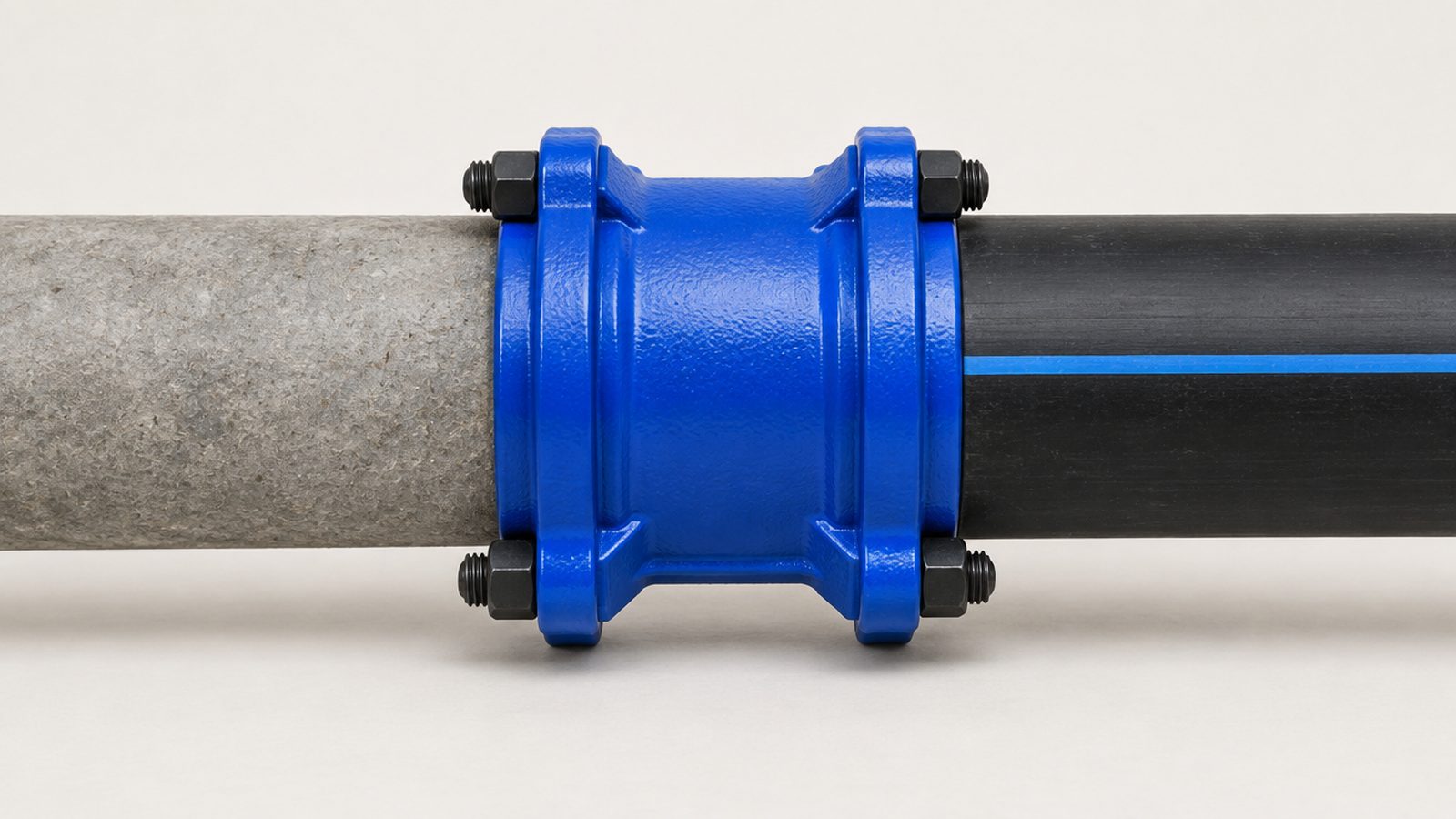
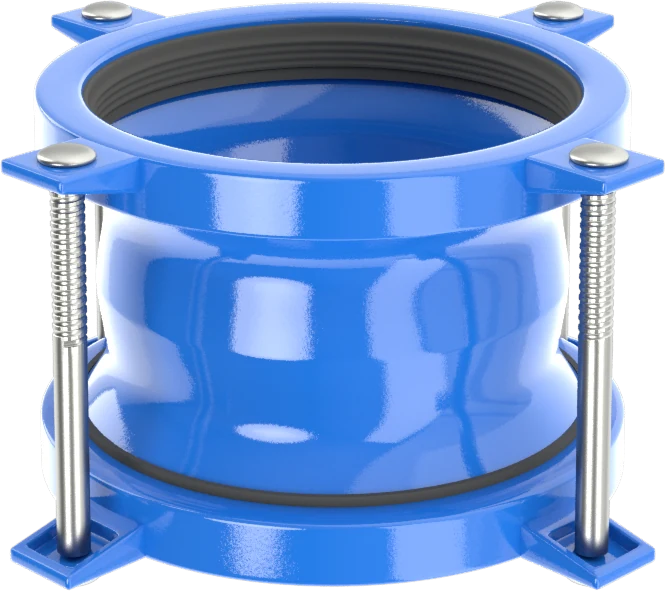
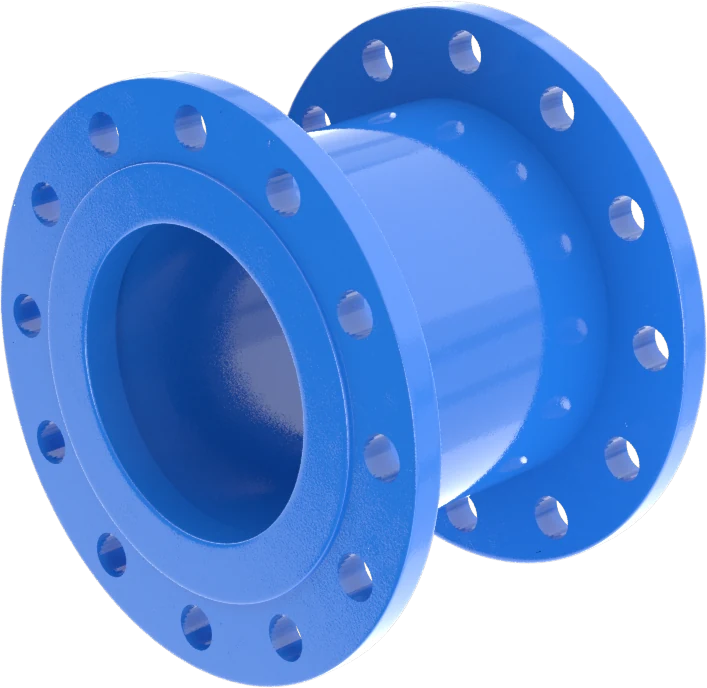
The wide-range flange adaptor works the same way but with an even wider range and a stepped body, designed to jump from one nominal size to another without a reducer. It is the one used in control heads where the valve is DN 100 and the pipe is 125, for example. Its sister part for joining two pipes is the wide-range coupling.
Anti-pull flange adaptor: restraint
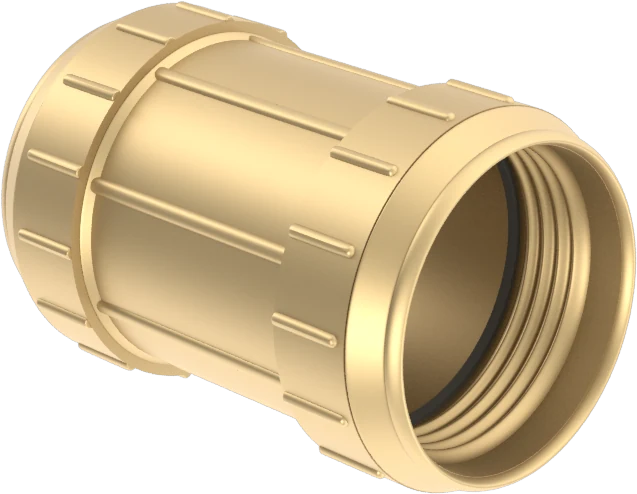
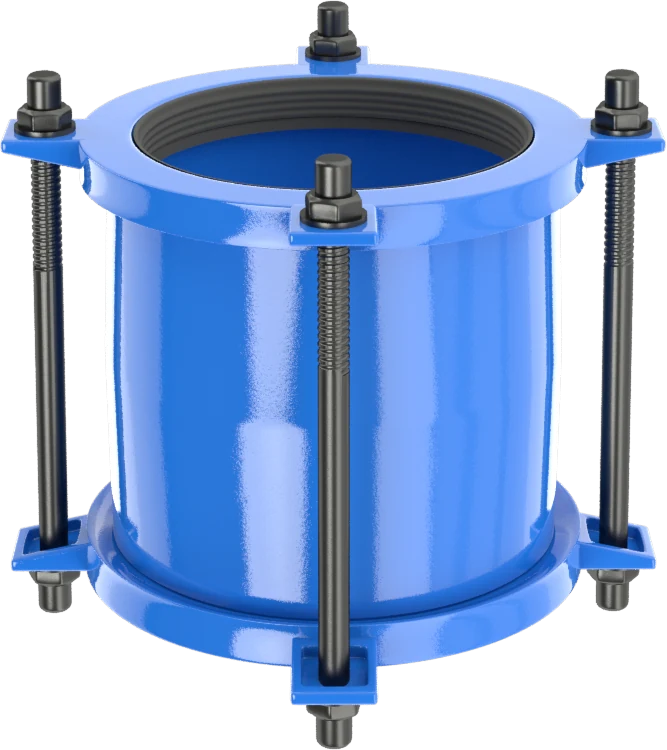
The anti-pull flange adaptor for PVC/PE adds the toothed brass ring of our self-anchoring systems. On tightening, the ring bites into the pipe and the flange adaptor no longer pulls out, even when the valve is at an unanchored end of the network or in a valve chamber. A DN 100 anti-pull flange adaptor for Ø110 pipe replaces a concrete thrust block. For large diameters or high pressures there is the double-chamber version, with sealing and restraint in independent chambers.
And the usual flanges
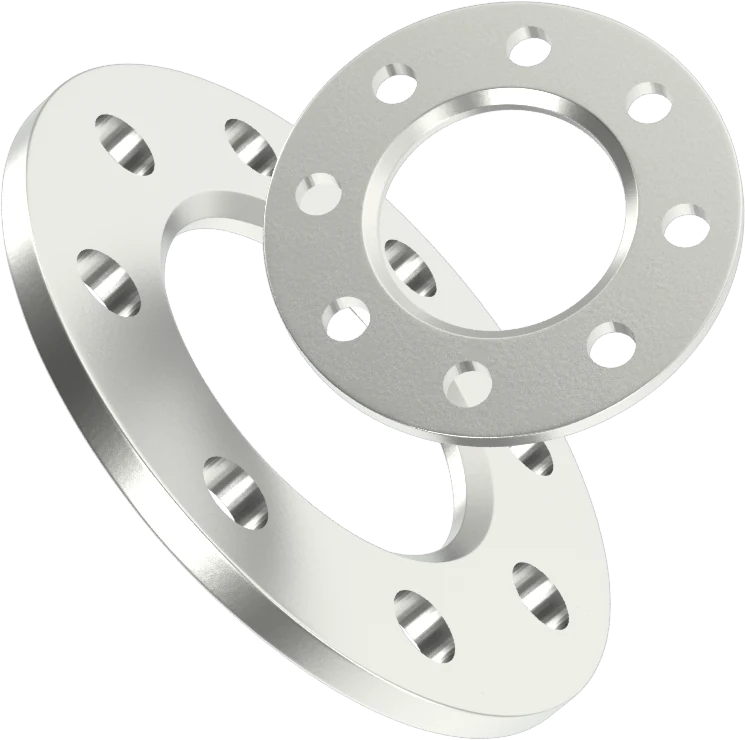
When the pipe has its own PE or PVC stub flange, what you need is a loose (backing) flange: the flange for HDPE stub flange, irrigation type, which is lighter, or the flange for PVC stub flange. And to close off an end or weld onto steel, DIN blind and plate flanges. The whole family is in the Flanges category.
The quick rule
- Pipe of uncertain diameter → universal.
- Change of nominal size → wide-range.
- No anchorage or with pull-out → anti-pull.
- Pipe with stub flange → loose flange.
If you are still in doubt, in How to connect an asbestos cement pipe to PVC or HDPE we explain how to measure the outside diameter of the pipe, which is the figure that decides everything else.