
28 April 2026 · asbestos cement · couplings
How to connect an asbestos cement pipe to PVC or HDPE without replacing the whole network
Thousands of kilometres of asbestos cement pipe are still in service. When you have to join it to new pipe, the right part depends on the outside diameters and on whether there is a risk of pull-out: Gibault joint, wide-range coupling or self-anchoring transition coupling.
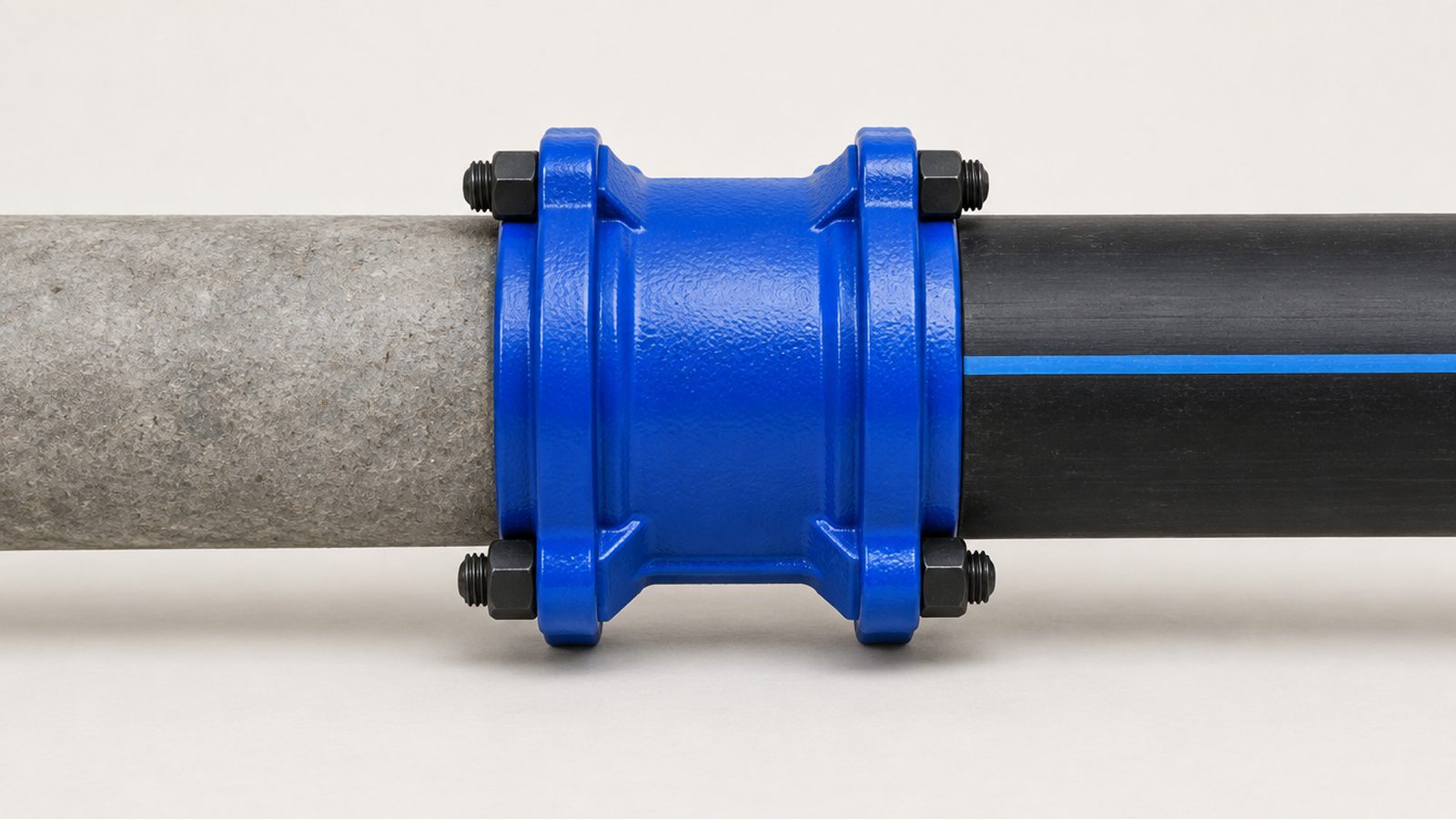
In Spain there are still thousands of kilometres of asbestos cement (AC) pipe in irrigation and water supply networks. It cannot all be replaced at once, so renewal is done section by section, and every new section of PVC or HDPE ends up in the same place: a joint with old pipe of a different material, a different outside diameter and, often, a different surface roughness. We manufacture three families of parts for that point, and choosing well between them prevents most of the leaks we are later called out to repair.
The figure that rules: the outside diameter
Asbestos cement pipe was manufactured in classes (A, B, C, D…) and each class has a different outside diameter for the same nominal size. A 100 mm class A pipe does not measure the same as a class D one. Before ordering anything, the outside diameter has to be measured with a caliper or a pi tape. It is the only piece of information we need to get it right.
Gibault joint: the classic
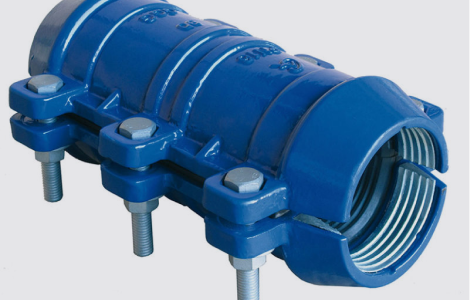
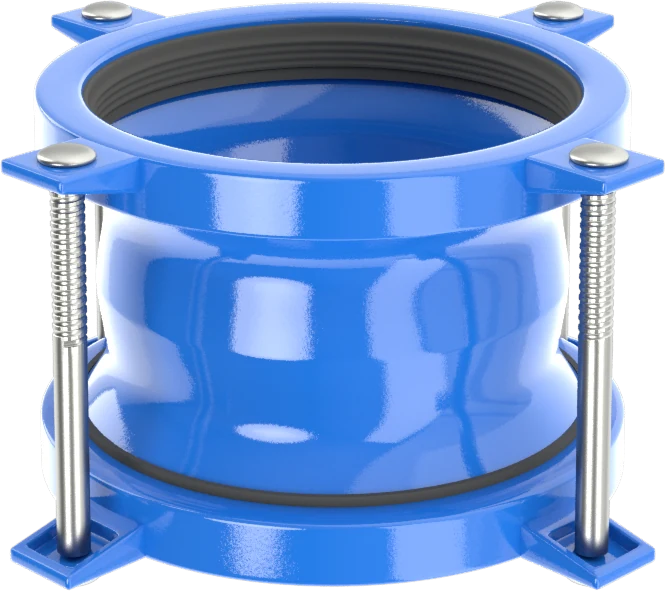
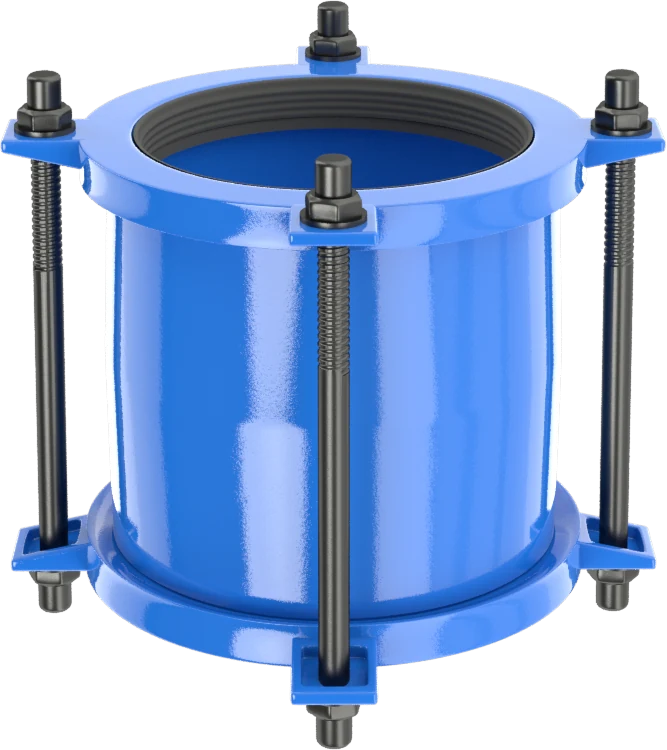
The Gibault joint is the traditional solution: a central cast iron sleeve, two flanges and two rubber gaskets that are compressed against the pipe as the bolts are tightened. We manufacture the Gibault joint for asbestos cement in the sizes of each class, and the ductile iron Gibault joint for PVC with blue epoxy coating for new pipe. It is economical and reliable, but it does not restrain axially: it needs a thrust block or a buried and compacted section that stops the pipe from moving.
Wide-range coupling: when the outside diameters do not match
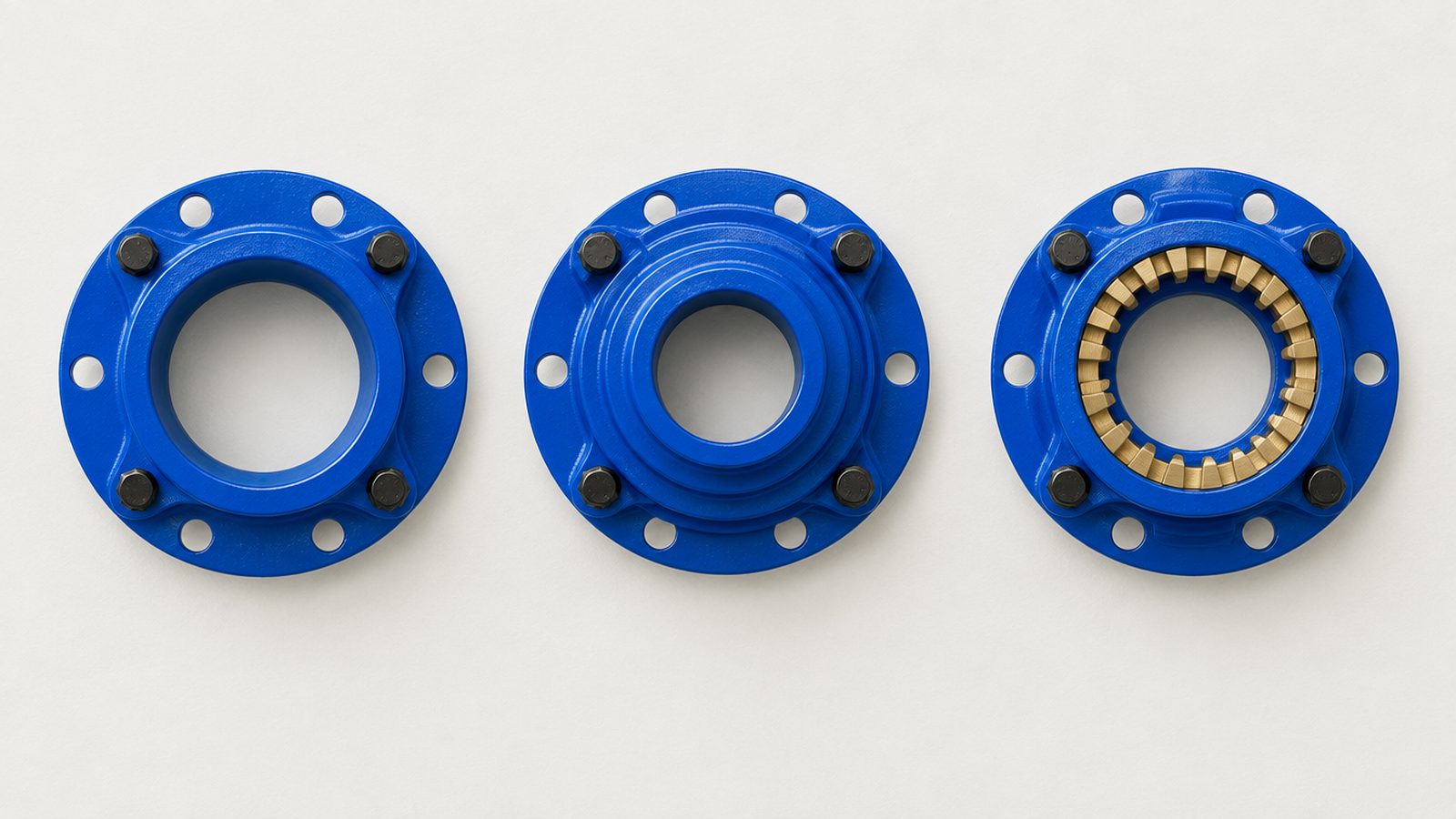
When the asbestos cement pipe measures, say, 118 mm and the new PVC 110, a conventional Gibault joint will not seal. The wide-tolerance coupling has wide-range gaskets and covers two diameter steps in a single part. With it you do not need to identify the exact class of the asbestos cement: it is enough for the outside diameter to fall within the range. If what you need is to close off a section, the universal end cap uses the same principle.
Self-anchoring transition: when there is pull-out
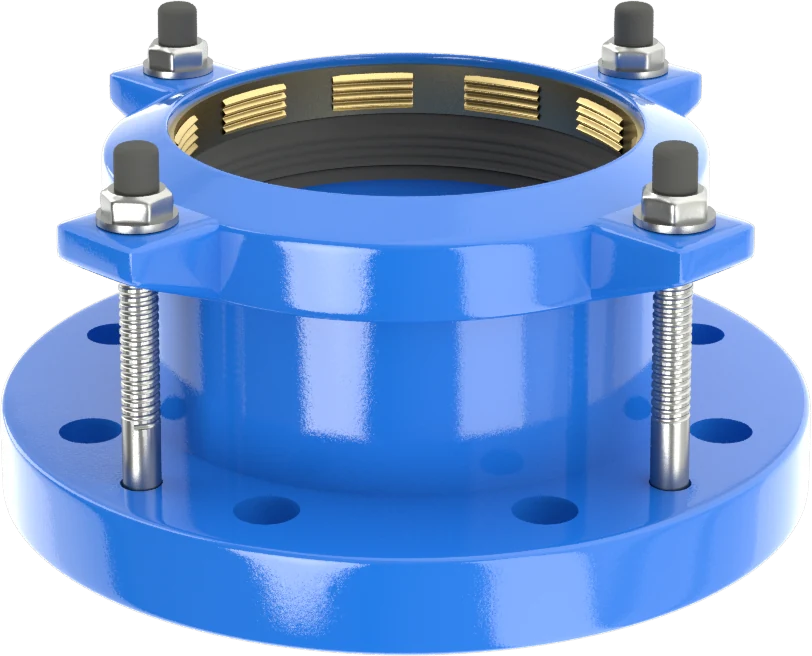
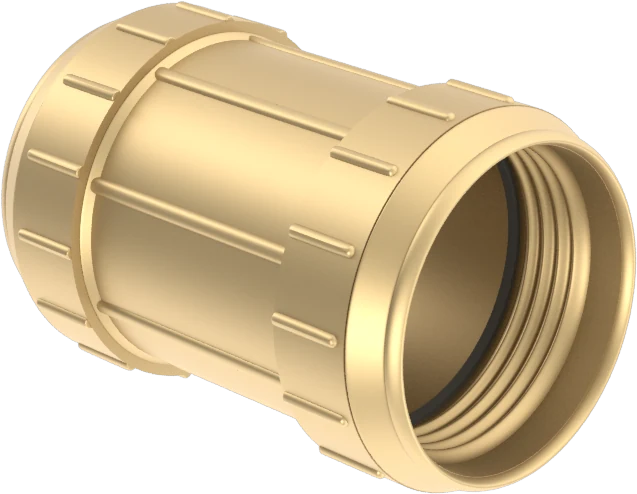
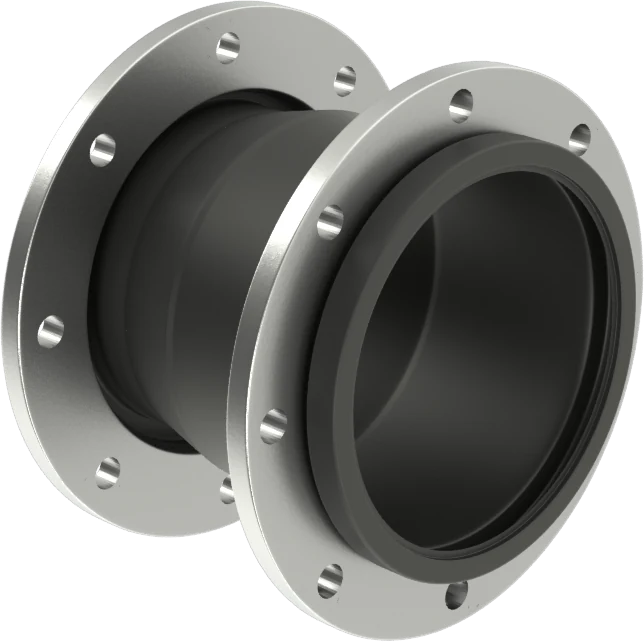
In a pressurised network with changes of direction or without anchorage, the joint has to restrain the pipe. The universal self-anchoring transition coupling combines the wide-tolerance gasket on the asbestos cement side with a toothed brass ring on the PVC or PE side, so the new pipe does not pull out even when the pressure rises. It is the one we always recommend whenever the trench is going to be backfilled without thrust blocks. If you need to finish with a flange, the universal flange adaptor does the same job towards a valve or a flanged fitting.
A tip from the workshop
Old asbestos cement has an irregular surface: clean it with a wire brush until it is smooth before offering up the gasket, and tighten crosswise. And do not try to "save" a section that is already flaking: it is better to cut it a few centimetres further along and join onto sound material.
For everything to do with axial pull in PVC and PE, we recommend reading Anti-pull fittings: what they are and what they are for. And if you have doubts about an unusual size, send us a photo of the caliper: we have seen almost all of them.